✓ Content Found
Mount Shasta has stood quietly over Northern California for decades, but new warnings have people looking at the mountain very differently.
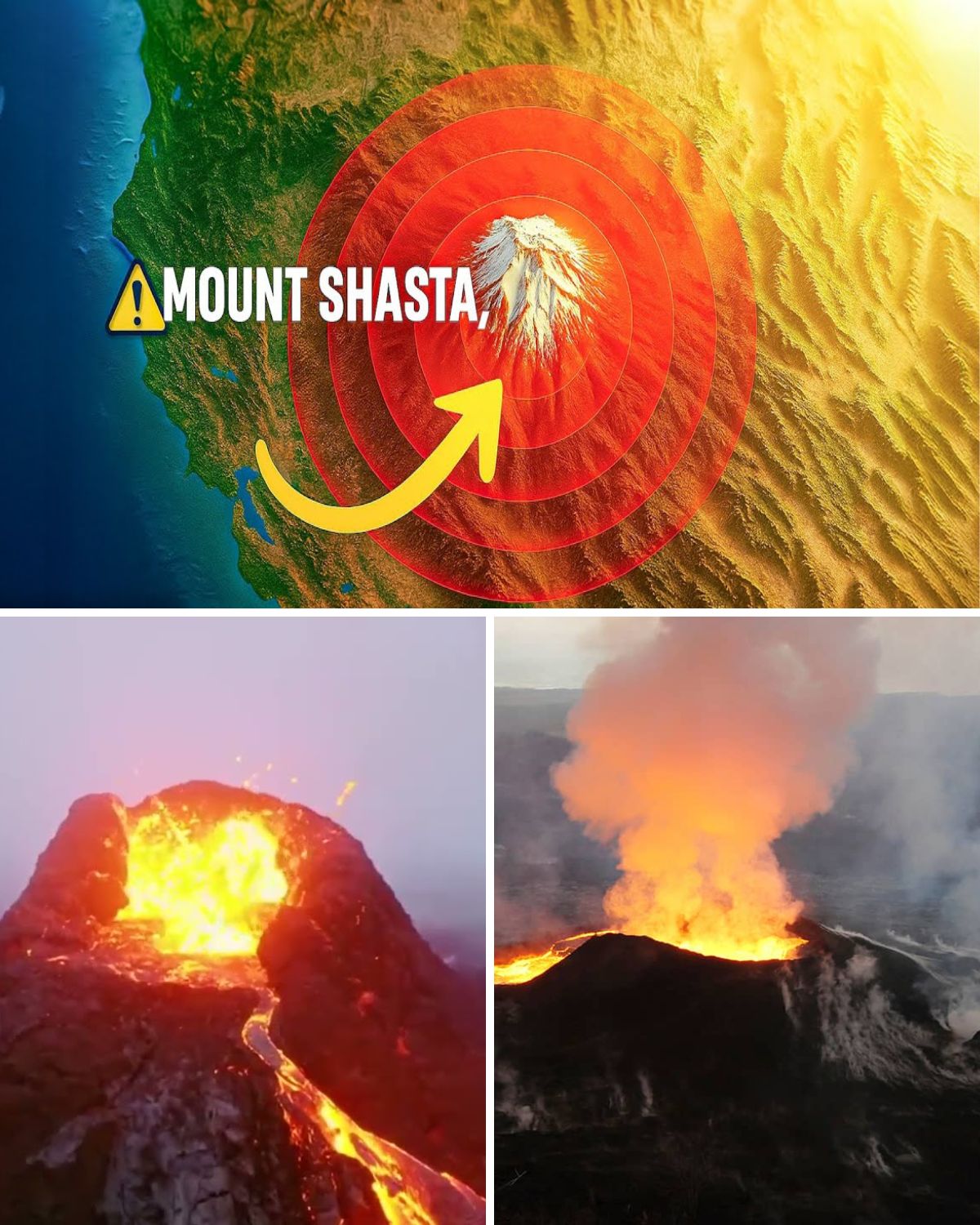
Mount Shasta is stirring, and the stakes couldn’t be higher! After 44 years of dormancy, the U.S. Geological Survey (USGS) has issued a red alert for the iconic California volcano, signaling an imminent eruption could be on the horizon. This alarming news comes on the heels of a climber’s rescue, who fell and became disoriented on the mountain just days ago. The situation has escalated dramatically, with the volcano showing signs of increased seismic activity, ground deformation, and gas emissions. This isn’t just a routine update; the data indicates that magma is inching closer to the surface, raising concerns for nearby communities. The red alert signifies that the risk of an eruption has reached a level that demands immediate attention from emergency agencies and scientists alike. Recent weeks have seen a surge in seismic tremors beneath Mount Shasta, with small earthquakes becoming more frequent and intense. Some of these quakes suggest that magma is moving or that pressure is building within the rock. Additionally, ground monitoring instruments have detected unusual uplift, indicating that the mountain itself is swelling. Gas emissions, particularly sulfur dioxide, have also spiked, hinting at volcanic activity beneath the surface. Historically, Mount Shasta has a complex geological past, with a series of eruptions that have shaped its landscape over thousands of years. The potential for a new eruption poses significant risks to infrastructure and communities located nearby. Volcanologists have developed hazard maps that illustrate how an eruption could impact roads, waterways, and populated areas. With the red alert now in effect, USGS teams are ramping up their monitoring efforts. Field crews are being deployed, and remote sensing technology is being enhanced to ensure no sign of activity goes unnoticed. Local authorities are also on high alert, preparing for possible evacuations and road closures as the situation evolves. For residents living in the shadow of Mount Shasta, this alert is a wake-up call. The once-dormant mountain could soon become a source of ash and lava, prompting schools and emergency services to revisit their contingency plans. The alert also raises concerns for air travel, as even minor eruptions can disrupt flight paths and lead to significant delays. As scientists closely monitor the volcano, they are faced with the challenge of interpreting the data accurately. Each tremor and gas emission adds to the narrative of a mountain awakening from its slumber. The stakes are high, and the need for precise communication is crucial to avoid panic while ensuring public safety. In the coming days, all eyes will be on Mount Shasta as it continues to exhibit signs of unrest. The geological forces at play are complex, and while the red alert serves as a warning, it also presents an opportunity for scientists to study volcanic dynamics in real time. As the situation develops, the community is left to ponder: Will Mount Shasta erupt, or will it settle back into its peaceful state? The answers lie in the shifting ground beneath this majestic mountain.