

Ferrari’s SF-26 has recently undergone a significant strategic shift in response to Lewis Hamilton’s urgent demand for improvement. The team has redirected its efforts towards two critical areas: the chassis and the engine. This marked change follows a series of development upgrades that yielded minimal results, prompting Hamilton to call for a more focused approach from the Scuderia.
Speaking ahead of the Canadian Grand Prix, Hamilton expressed his frustration over the team’s previous scattered development efforts. He stated, “Ferrari is now focusing urgently on the two most important areas of the car,” emphasizing that this decision is the “only sensible response to the current deficit.” Hamilton highlighted the positive collaboration among the engineers, noting, “We are urgently focusing on upgrading two main parts, the chassis and the engine,” which he believes are vital for enhancing the car’s performance.
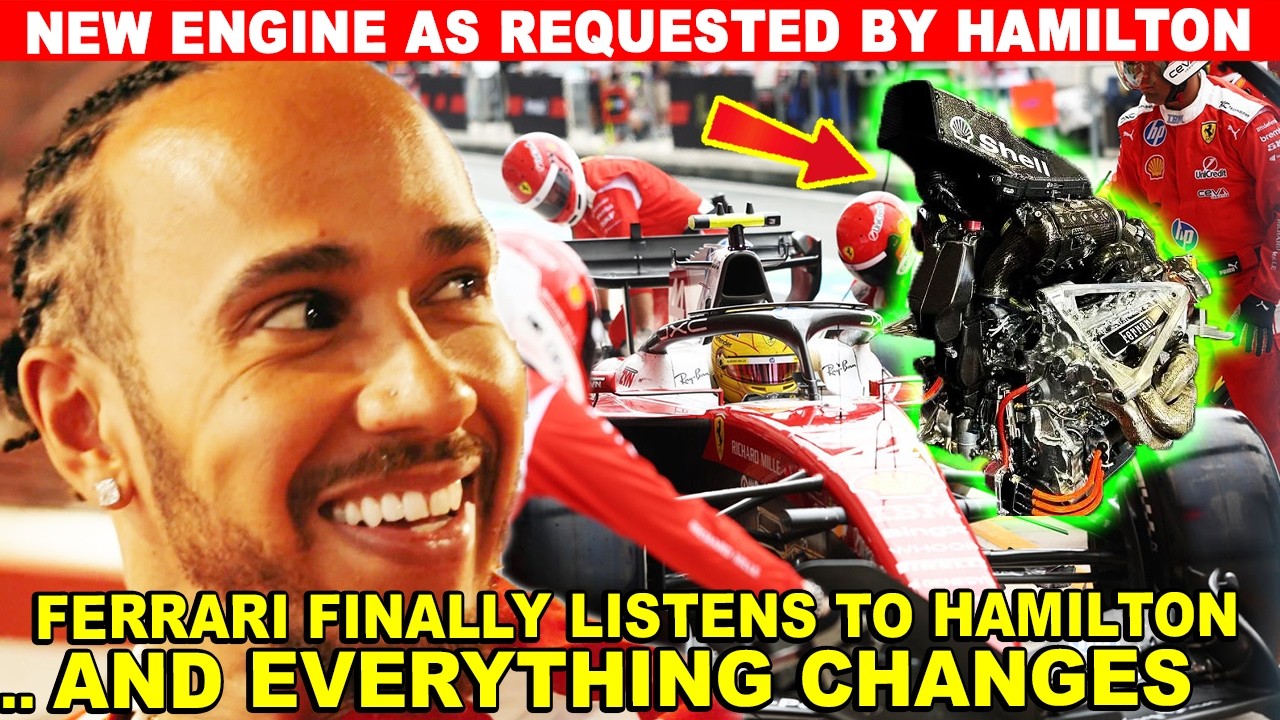
Historically, Ferrari’s early 2026 development strategy favored aerodynamic efficiency over sheer power, believing that a well-optimized chassis could compensate for a less powerful engine. However, this approach has left the SF-26 vulnerable in situations where horsepower is crucial. As a result, the team has faced challenges, often performing well in corners but losing pace on straightaways. This season has been characterized by sporadic competitiveness, followed by disappointing losses in speed during critical tests.
In response to these challenges, Ferrari is introducing the new ADUO upgrade, which is expected to debut at the Spa-Francorchamps circuit. This upgrade is seen as a potential reset for the team, which currently lags behind competitors like Mercedes by approximately 30 horsepower. Earlier upgrades, while beneficial, did not sufficiently address the power deficit, leading to the urgent need for the ADUO.
The ADUO upgrade is designed to enhance performance without drastically altering Ferrari’s identity. The team’s philosophy emphasizes an integrated approach, where the engine, chassis, and aerodynamics are closely linked. This enables the team to refine the vehicle’s bodywork and improve airflow, although it also means that changes in one area can impact others significantly. The engine, designated as the 067/6 power unit, operates best at temperatures exceeding 100° C, a choice that prioritizes integration over conventional thermal efficiency.
Reports indicate that Ferrari may have sacrificed some horsepower—estimated to be between 10 to 12— to achieve a more aerodynamic package. The FTM system, a crucial element of Ferrari’s design, generates significant rear-end load, enhancing grip in corners and providing an aerodynamic advantage. However, this system’s complexity makes it challenging for rivals to replicate.
Ferrari’s upcoming engine update aims to recover about half of the power deficit while maintaining the efficiency of the SF-26. Success with the ADUO could bring the car closer to a competitive balance between power and handling. This renewed focus has shifted the atmosphere at Maranello, where earlier development efforts felt disjointed. Hamilton’s intervention has prompted a more candid discussion about the car’s performance issues.
Looking ahead, the debut of the new engine at Spa presents a critical test for Ferrari. If the ADUO upgrade delivers the expected results, it could help the team close the gap in straight-line speed. Conversely, failure to improve could leave Ferrari vulnerable as the season progresses. The stakes are further heightened as concerns grow about potential regulatory changes that could impact the FTM concept in future seasons.
Ferrari’s leadership is aware that the decisions made now could significantly affect the team’s long-term technical direction. The urgency to address the current power deficit is palpable, as the team recognizes that the time for broadening their performance approach has passed. With the stakes increasing, the upcoming race at Spa will serve as a pivotal moment for Ferrari’s season and its ambitions.
As Hamilton noted, the team can no longer afford to be merely competitive on the fringes. The pressure is on for Ferrari to translate these strategic adjustments into tangible results, and the upcoming races will be crucial in determining whether they can reclaim their position among the frontrunners in Formula 1.