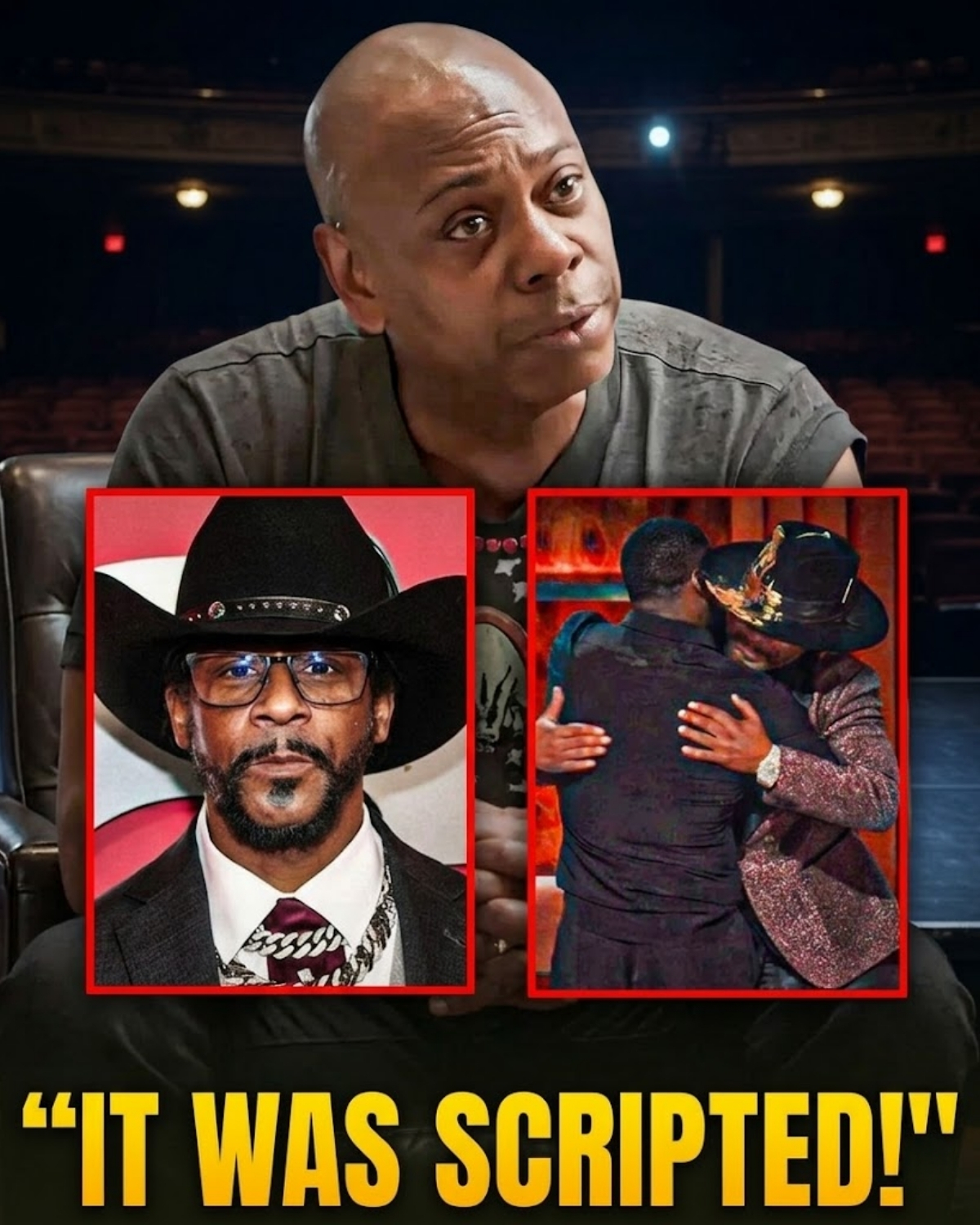

In a jaw-dropping revelation that has sent shockwaves through the comedy world, Dave Chappelle has stepped into the spotlight to clarify the genuine motivations behind Katt Williams forgiving Kevin Hart, and it is nothing short of explosive. The discourse surrounding this unlikely reconciliation has captivated fans and followers, igniting a tale of rivalry, redemption, and the unbreakable bonds of brotherhood within the often cutthroat world of comedy.

Chappelle, who has never shied away from discussing intricate relationships between comedians, offered an unexpected deep dive into the tumultuous history among some of the industry’s biggest names. In an interview that has quickly gone viral, Chappelle elucidated his perspective on the factors that led Williams to extend an olive branch to Hart, a gesture that was both shocking and enlightening to fans who have followed their complicated on-and-off feud for years.
This moment arrives on the heels of recent public appearances where Williams and Hart were seen sharing laughs and camaraderie, transforming what many saw as a long-standing rivalry into an unexpected friendship. Viewers have been left asking: what prompted this change of heart? Chappelle’s response is a revelation—an insider look that unravels the intricate weave of regret, respect, and brotherhood steeped in the heavy undercurrents of their shared experiences in the public eye.
The unfolding drama began when Katt Williams, a master of raw and commanding humor, openly criticized Hart in the past, citing issues of authenticity and competition in a landscape where personal narratives and comedic prowess often clash. This dispute escalated to such a level that it seemed irreparable, leaving fans to speculate about the future of their relationships in an industry rife with division and rivalry. But, according to Chappelle, the tides have now turned, illustrating that time can indeed temper even the most intense grievances.
Drawing from an abundance of personal experiences, Chappelle shared a profound insight into Williams’ decision to forgive Hart, framing it not just as a resolution to a feud but as a metamorphosis towards self-acceptance and maturity. Chappelle believes that Williams, having faced his share of battles both personally and professionally, recognized the need for healing and growth—not only for himself but also for those around him. “Forgiveness is a gift we give ourselves,” Chappelle declared, encapsulating the essence of Williams’ decision. What seemed at first like an inexplicable act was revealed to be a powerful testament to Williams’ evolution as an artist and a human being.
But Chappelle’s commentary didn’t stop there. He delved deeper into the pressures of fame, asserting that the relentless scrutiny faced by performers often leads to misguided rivalries that distract from their true ambitions and talents. He painted a vivid picture of the industry, suggesting that it operates like a pressure cooker, where misunderstandings can boil over into misaligned contests rather than collaborations. Through his lens, the forgiveness isn’t merely about individuals reconciling; it’s about elevating the art form and setting a precedent for younger comedians who often find themselves tangled in similar conflicts.
As the conversation has gained traction across platforms, the documentary-style interview segment featuring Chappelle has garnered attention not only for its content but also for presenting a rare moment of vulnerability and mutual respect among comedians of color. When Williams embraced Hart, it was a statement that resonated far beyond personal relations—it was an affirmation of community, resilience, and the shared identities born out of struggle in a historically oppressive industry.
Social media platforms have exploded with reactions—fans are praising Williams for his strong choice to forgive, while others have taken to interpreting the implications of such a reconciliation on the dynamics of the comedy scene moving forward. The ripple effects could be monumental: other comedians may find hope in Williams’ choice to rise above and pave the way for camaraderie rather than competition.
Despite the positive outcomes of this revelation, questions linger regarding the complexities of redemption in the public eye. How can more artists navigate similar waters, and are there further consequences for past animosities when played out on such a grand stage? Chappelle’s words provide a glimmer of hope—encouraging reconciliation not just for personal relief but as a valid pathway toward greater community solidarity.
As the dust of this revelation settles, one thing is clear: Dave Chappelle’s insights offer invaluable wisdom into the volatile world of comedy, where pain and pleasure coexist, and forgiveness is not just an act of kindness but also a transformative force. The ripple from Katt Williams’ forgiveness will likely resonate throughout the industry for years to come, as it becomes an essential part of the narrative surrounding not only their lives but the broader implications of how we, as a society, view conflict and resolution within our creative communities.
In a world where comedic legends often feel the weight of rivalry, this renewed alliance serves as a clarion call for unity and healing—a reminder that behind the laughter and personas, there lies a human heart, capable of change and acceptance. Keep an eye on this story as it continues to unfold; if history has taught us anything, it’s that the journey of these comedic titans is far from over.