

Some royal appearances are simply duties to be fulfilled.
Others become something far greater — moments that transcend ceremony and enter history.
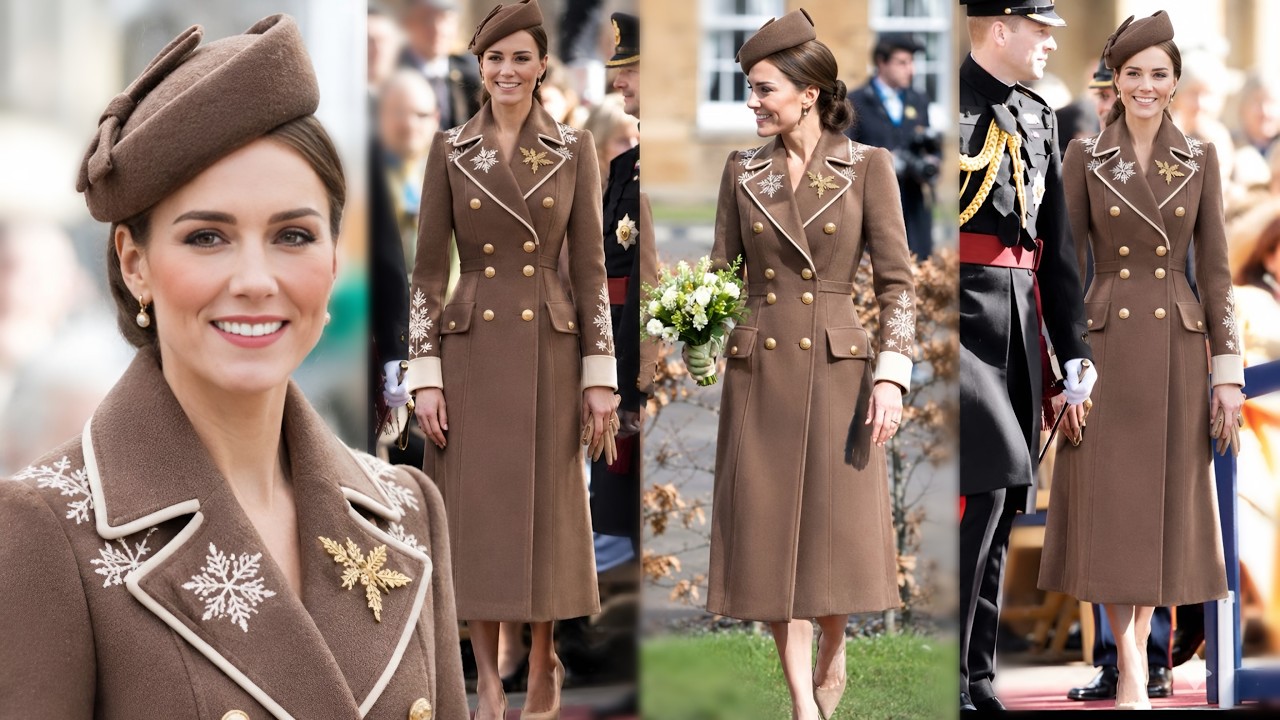
On April 25, 2026, as Catherine, Princess of Wales, stepped into the spotlight at the Anzac Day commemorations in London on behalf of King Charles III, many felt they were witnessing more than a senior royal carrying out an engagement.
They were watching the future Queen of Britain quietly come into focus.
Against the solemn backdrop of the wreath-laying ceremony at Senate House in Westminster and the service of remembrance at Westminster Abbey honoring the fallen troops of Australia and New Zealand, Catherine arrived in a commanding navy coat dress by Sarah Burton — the very designer who created her iconic royal wedding gown.
But this was about more than fashion.
It was a statement.
The sharply tailored silhouette, military-inspired structure, and striking white lapels conveyed a sense of authority balanced with grace. A vivid red poppy pinned to her lapel served as a poignant tribute to those who made the ultimate sacrifice, standing out against the deep navy fabric like a symbol of remembrance etched into history.
Her bespoke navy hat by Jane Taylor added architectural elegance, while Gianvito Rossi heels and a structured Dior handbag completed a look that was sophisticated without distracting from the significance of the occasion.
Yet it was the jewelry that carried the greatest emotional weight.

Catherine chose to wear the sapphire and diamond drop earrings once owned by Diana, Princess of Wales — a decision that immediately resonated with royal historians and admirers alike.
The choice evoked memories of one of Diana’s own military-inspired appearances in 1995, creating an unspoken connection between two women forever linked by destiny, though they never had the chance to meet.
Nearly three decades after Diana captivated the world, her legacy seemed to shimmer once more through the woman who now stands at the heart of the monarchy’s future.
Royal watchers quickly flooded social media with praise.
“She looks every inch a future Queen.”
“Elegant, dignified, and utterly regal.”
“This is the image of modern monarchy.”
The reaction was no accident.
Over the years, Catherine’s style has undergone a remarkable transformation.
If her early years as the Duchess of Cambridge were defined by youthful glamour and romantic silhouettes, recent years have revealed a more assured, stateswoman-like presence.
Royal fashion commentators have even coined the term “the Quiet Queen era” to describe this evolution.

From the powder-blue Katherine Walker coat dress that captivated audiences in 2025, to the striking white Jenny Packham ensemble that marked her return to public life following her health battle in 2024, to the emerald-green coat she wore as Colonel of the Irish Guards in 2023, each appearance has reflected a woman steadily growing into a historic role.
She does not need grand declarations.
She does not seek headlines.
Instead, Catherine communicates through symbolism, restraint, and a quiet confidence that has become one of her defining strengths.
Every carefully chosen detail tells a story.
Every appearance reveals another layer of the woman preparing for one of the most significant roles in modern Britain.
As she emerged from Westminster Abbey that day, Catherine had done far more than fulfill a royal duty.
She left behind the unmistakable sense that a new chapter in the story of the British monarchy is already being written.
And if her recent appearances are any indication, Britain may already be witnessing the woman who will one day wear its most important crown.
Quietly.
Gracefully.
But unmistakably.