

“Horrendous.” “Diabolical Feast.” “Macabre.” “Terror in Matamoros.” These were some of the headlines that could be read in the newspapers of the city in the state of Tamaulipas and throughout Mexico after the discovery made on April 11, 1989, at the Santa Elena ranch. An audio recording of a journalist from that time states that the site “showed signs of human carnage everywhere.” Hidden underground lay “The Altar of the Gods,” a pit that concealed 13 dismembered bodies on the property. These were times when the war on drugs that would unleash violence in the country wouldn’t take shape for another 17 years . Clandestine graves and massacres were “extremely rare,” and even rarer if they had a satanic undertone.
 A lapse in judgment by David Serna, alias ” La Coqueta ,” while evading a checkpoint on the highway between Matamoros and Reynosa, allowed authorities, after his capture and interrogation, to locate the place he was returning to after delivering a shipment of marijuana across the border. His confession not only revealed the existence of a criminal gang dedicated to 𝒹𝓇𝓊𝑔 trafficking, but also one specializing in human sacrifices . Inside the shed on the ranch, according to the account in “The Red Book of the Administration of Justice” —based on the version shared by police authorities—agents found 110 kilos of marijuana, weapons of various calibers, and what had become, over the last nine months, a torture house where victims suffered amputations and organ harvesting.
Inside the shed stood a massive metal cauldron, recounted José Lira—a journalist and collaborator with the Superior Court of Justice of Mexico City—in which the remains of humans and animals lay rotting. According to various reports from authorities at the time, the organs, amputated limbs, and animal parts were cooked in this vessel into a concoction that was ingested by the members to obtain “magical powers and immunity from the dangers posed by law enforcement.” The horrific scene in the building also included pentagrams, knives, saws, heads of garlic, bottles of liquor, and bloodstains. Serna and three others arrested that day pointed to Adolfo Constanzo, known as El Padrino —linked to the Gulf Cartel— , who called himself a sorcerer, and his accomplice Sara Aldrete , nicknamed La sacerdotisa , as the heads of the operation, a criminal group and sect that the press dubbed Los narcosatánicos .
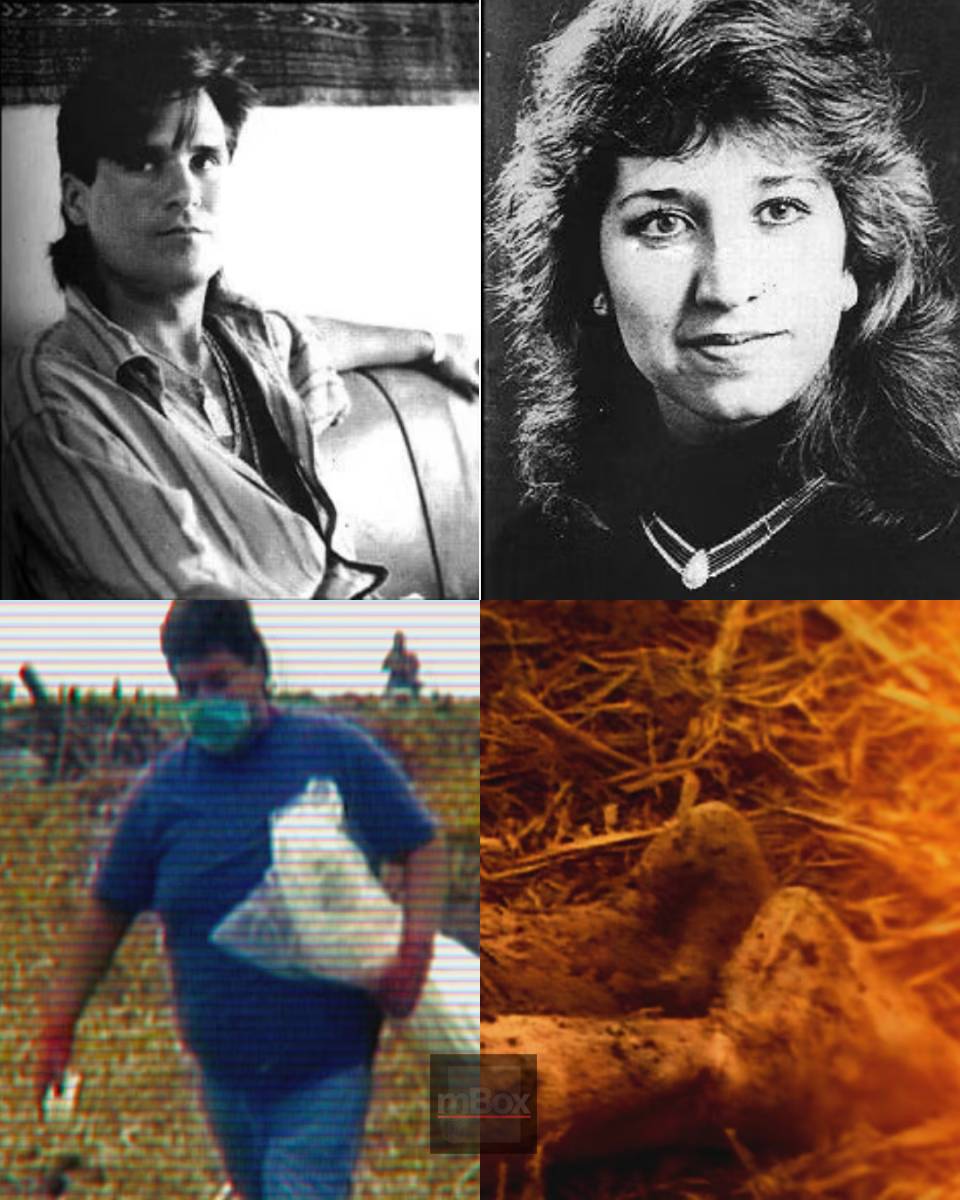
Adolfo Constanzo, leader of the sect ‘The Narcosatánicos’, in 1989.HBO Max
More than 30 years after this event, the documentary miniseries The Narcosatánica , by director Pat Martínez —available since July 13 on HBO Max—, presents the testimonies of former authorities in charge of the case, journalists who covered the events and the voice of Aldrete, the only member of the criminal gang who remains alive, to bring to light unpublished details and reconstruct the events of this gruesome era that horrified Mexico in the late eighties and early nineties.
Martínez has been working on the project for 15 years, since she met Aldrete, who has been incarcerated for 31 years and is currently held at the Tepepan Women’s Social Reintegration Center in Mexico City. She was sentenced to 647 years and five months in prison for the inhumation, exhumation, and desecration of corpses, as well as the murder of 13 people. “Sara will always carry the stigma of being a narco-satanist , but I wanted to approach her and present her as I knew her, as a person. You can believe in the rituals or not, but Sara, for the first time, recounts them in this way: the magic, what was practiced inside, what captivated her, the hook Adolfo used on her. She was interested in the supernatural, and that’s what makes this case stand out from many other criminal cases. How she connected with this santero ,” the director explains.
In the notebooks and diaries found on Adolfo Constanzo, his clients included prominent politicians from states like Nuevo León, Tamaulipas, and Oaxaca, as well as heads of the now-defunct Federal Judicial Police, celebrities, and Gulf Cartel leader Juan García Ábrego. All believed in the power of witchcraft . “In this country, 𝒹𝓇𝓊𝑔 trafficking doesn’t work if the police aren’t on their side. Most of the commanders were involved,” states Humberto Huerta, a reporter for La Prensa covering the case in 1989, in a segment of the first episode.
Sara Aldrete, in the center, in 1989 presented by the authorities as one of those accused of the murder of 13 people.HBO Max
According to Carlos Monsiváis in *The Red Book of the Administration of Justice *, Constanzo, who had learned the Palo Mayombe religion from his mother , “came to nothing for brutally eliminating transvestites, marijuana users, and police officers.” However, he was “annihilated” by the kidnapping, torture, and murder of the young American Mark Kilroy, who was on spring break vacation in the Zona Rosa of Matamoros when he was abducted. His brutally dismembered body was one of the 13 found in Santa Elena. The capture of those responsible for the death of the 21-year-old University of Texas student became a matter of national importance for the presidents of the United States, George H.W. Bush , and Mexico, Carlos Salinas de Gortari . Following the discovery of the body and under pressure from the neighboring country to the north, the high priest died a few months later in Mexico City during a shootout with police.
Up to this point, the details of these crimes are known; however, according to those involved, there are still pieces of the puzzle that remain incomplete or that were not mentioned at the time, and that is what the miniseries aims to reveal. True crime , to which * La Narcosatánica* belongs , is a genre that has become popular in recent years, seeking to explain, reconstruct, and provide new information about important criminal cases. This non-fiction format has a large audience that enjoys this type of content, but there are also voices that question it , considering it morbid and revictimizing for the families affected by these kinds of events. Claudia Fernández, head of development of unscripted audiovisual content for HBO Max Mexico, says that it is not about redeeming Aldrete, but rather about allowing the audience to draw their own conclusions.
“It’s important to maintain a balance between the different protagonists; that lends credibility. It’s a very serious, in-depth investigation, in which we aren’t dwelling on the crime. We present the information in a way that wasn’t presented at the time, avoiding the distortion that occurred on the part of some media outlets, the justice system itself, the authorities, and a host of other factors that prevented the case from being told in a way that was closer to the truth,” Fernández adds.
Despite the fact that it was “quite complicated” to access the archives from that time, because most of the material belongs to a few television stations that do not want to license the content, both Martínez and Fernández are convinced of the journalistic rigor of the series and hope that the public can go beyond the usual topics that surround and cloud the case, so that they ask questions and challenge what was already known, about the other people involved and about Aldrete herself.