

Police officers wearing bulletproof vests piled out of unmarked cars and fanned out around a small, one-story, tan-colored home in a working-class neighborhood of far west Fort Worth. The officers were members of the elite Delta Team of the U.S. Marshals North Texas Fugitive Task Force, a unit specially trained to arrest high-risk criminals. Approaching the house, they unholstered their Glocks. One carried a metal battering ram in case they needed to bash in the front door. Two of the officers circled to the backyard to capture anyone who tried to flee.
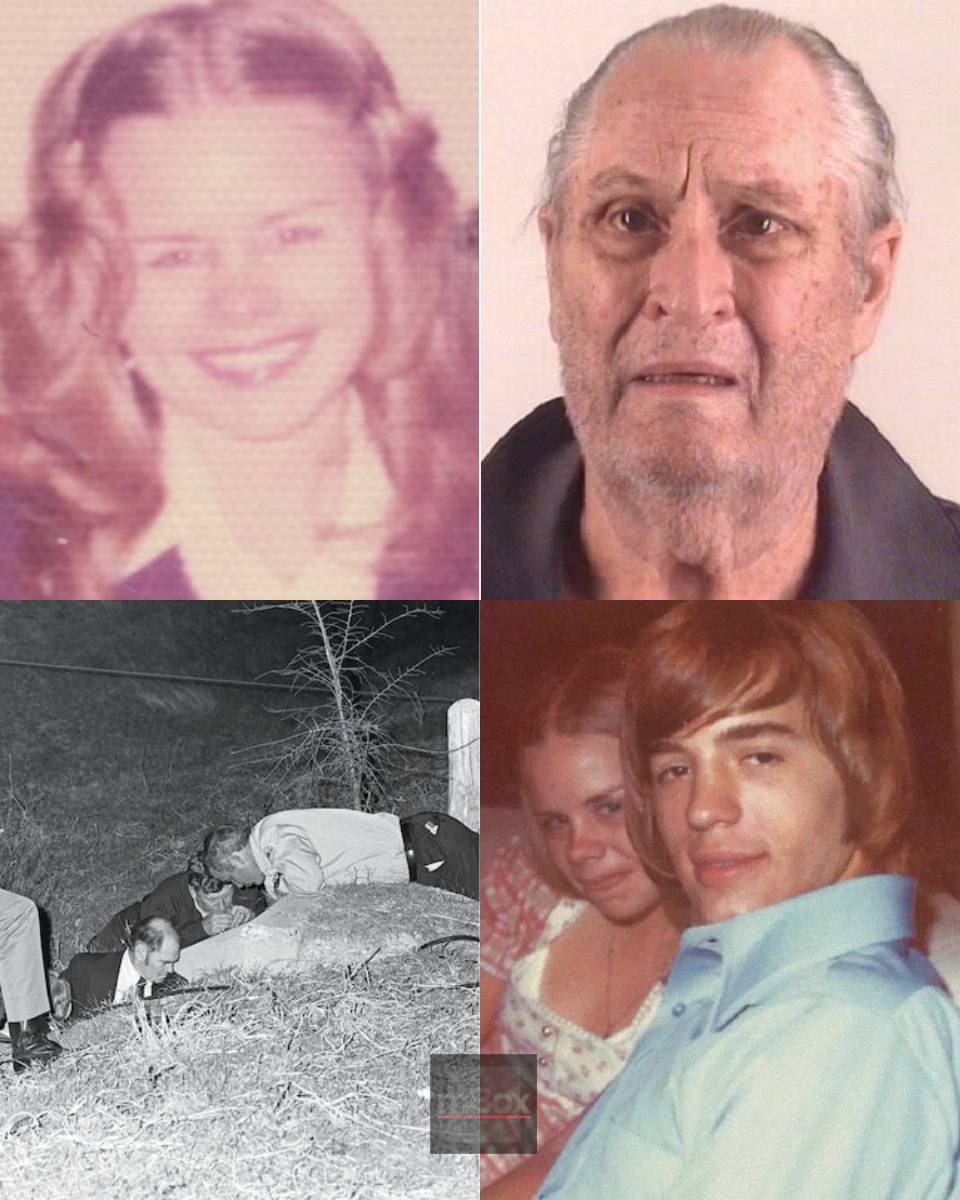 It was the afternoon of September 21, 2020. The officer in charge of the operation, a 22-year police veteran named Travis Eddleman, stepped onto the front porch and rang the doorbell. A 77-year-old man opened the door wearing a gray polo shirt, blue jeans, and black dress shoes with white socks. Although he was six feet three inches tall and weighed 240 pounds, he appeared frail. His thinning hair, white with strands of gray, was brushed back over his head, and his brown eyes were sunken into his face.
“Mr. Glen McCurley?” Eddleman asked. He didn’t wait for an answer. “You’re under arrest. Please step outside, and do it now.”
McCurley seemed bewildered. He turned and looked at his wife, Judy, who had appeared beside him, wearing a bathrobe and leaning on a cane. As the officers handcuffed McCurley, Judy told Eddleman that her husband was sick with cancer and that he was scheduled to see a doctor later that day.
“Ma’am,” said Eddleman, “your husband has to come with us.”
McCurley had resided in west Fort Worth for nearly fifty years. He liked working with his hands and watching home improvement shows on television. Each week, he drove Judy to Walmart to buy groceries, and occasionally, they’d go to Pulido’s, a Mexican restaurant just a few minutes down the road. On Sundays he and Judy worshipped at a nearby church.
This Texas Teen is a Skateboarding Sensation
He seemed to be a good man leading a quiet life. One woman had even sent a letter to the Fort Worth Star-Telegram praising him and Judy for returning her lost wallet. “The world needs more folks like this,” she wrote.
But detectives had developed an entirely different perspective on McCurley. They had compelling evidence that he was responsible for the notorious unsolved murder of a teenage girl in 1974. And they suspected that wasn’t McCurley’s only heinous crime. They considered him a “person of interest” in at least three other killings of young women during the seventies and eighties.
 Carla Walker with Rodney McCoy.Courtesy of the Walker family
In 1974 Carla Walker was a seventeen-year-old junior at Fort Worth’s Western Hills High School. She was almost irrepressibly convivial, “the kind of girl who smiled and said hello to just about everyone she saw in the hallways,” a former schoolmate told me. “Everyone at Western Hills liked Carla.”
Just four foot eleven, Carla had a thick mane of honey-blond hair that fell below her shoulders. She was dating Rodney McCoy, a wiry, good-natured
kid who was quarterback of the football team. Rodney and Carla talked about enrolling together at Texas Tech University. She told her closest friends that she had no doubt she and Rodney would someday marry and start a family.
The evening of February 16, Rodney arrived at the Walkers’ cozy home in Benbrook, in far west Fort Worth, to take Carla to the school’s Valentine’s Day dance. When Carla walked down the stairs from her bedroom, she was proudly wearing the promise ring he’d given her. He pinned a corsage to her powder-blue dress, then drove her in his mother’s car, a 1969 Ford LTD, to the school cafeteria, which had been decorated with pink streamers and paper hearts.
The evening’s theme was “Love Is a Kaleidoscope,” and throughout the night students danced to a live band called Hydra. When the event ended, around 11:30, Rodney invited another couple to cruise Camp Bowie Boulevard and the Benbrook traffic circle with him and Carla. They stopped at a couple of teen hangouts, Mr. Quick Hamburgers and Taco Bell. Later, after dropping off the others, Rodney and Carla drove to a nearby bowling alley, Brunswick Ridglea Bowl, so that she could use the bathroom. When she climbed back into the car, they started kissing. Carla leaned back against the passenger door, using her purse as a pillow.
Then the passenger door flew open. Rodney would later say that he 𝒄𝒂𝓊𝓰𝒉𝓉 a glimpse of a tall man with short brown hair. The assailant was wearing a vest. He began bludgeoning Rodney over the head with the butt of a pistol. At some point, the gun’s magazine clip dislodged and fell to the parking lot. The man grabbed Carla. Rodney, barely conscious, heard him say, “You’re coming with me, aren’t you, sweetie?”
“Rodney, go get my dad,” Carla said. “Go get my dad.”
Rodney came to in the driver’s seat sometime around 1 a.m. He sped to the Walkers’ home, which was less than a mile away. He drove up over the curb onto the front lawn and slammed on the brakes.
Carla’s parents, Leighton and Doris, were still awake, playing dominoes in the dining room with relatives. Carla’s little brother Jim, who was twelve years old, and her elder sister, Cindy, who was eighteen, were in the living room, watching television. They heard someone banging at the front door and were stunned to see Rodney, blood dripping down his face. He was frantic. “Mr. Walker, they’ve got her,” he shouted. “They’re gonna hurt her bad.”
Leighton, a retired Air Force lieutenant colonel, grabbed his pistol and raced to the bowling alley. Doris dialed the operator on the family’s rotary phone and asked to be connected to the police. Officers soon arrived at the scene. Searching the parking lot, they found Carla’s purse along with the magazine clip that had been ejected from the assailant’s weapon. Other cops drove the surrounding streets in squad cars, scanning for any sign of Carla. After the sun rose, more joined the hunt. Peering through binoculars, a few circled the city in helicopters.
When classes resumed on Monday morning, detectives visited Western Hills High. They studied contact sheets of photos taken at the dance, looking for anyone who seemed out of place. They stopped kids in the hallways, asking if they knew anyone who would want to hurt Carla.
In the early seventies, Fort Worth’s population was roughly 400,000—less than half its size today. Local boosters promoted the city as a safe, family-oriented haven. “In our neighborhood, people didn’t even lock their doors,” Carla’s sister, Cindy, told me. “I know this sounds strange, but we were so naive about crime back then that we simply couldn’t imagine that Carla was dead. We figured that someone was going to drive by the house and drop Carla off, and we’d all move on from there.”
But on February 20, four days after Carla’s disappearance, two of the officers assigned to look for her were driving along a remote two-lane road near Benbrook Lake, about five miles southwest of the bowling alley. They spotted a culvert, a concrete tunnel built to let water flow beneath the road, and pulled over to peer inside.
They saw a young woman lying on her back, her face and neck covered with scratches and deep bruises. It was Carla. Her blue dress was bloody and ripped in several places, her bra was pushed up above her breasts, and her underwear and pantyhose were wadded up together at the entrance to the culvert. She had been strangled. Because there were no ligature marks around her neck, investigators believed that the killer had choked her using his hands.
Carla’s parents were asked to come to the hospital morgue to identify her. Jim went with them. “Someone took Mom and Dad down the hall to look at her, and my mom started to scream,” he told me. “I had never heard anyone make a sound like that. It was like an animal sound. That will stay with me for as long as I live.”
 Police searching the culvert where Carla’s body was found in 1974.Fort Worth Star-Telegram/The University of Texas at Arlington Special Collections
News of Carla’s murder covered almost the entire front page of the Star-Telegram. Her funeral, which was held at the Western Hills Church of Christ, was attended by more than 1,250 mourners, far more than the small sanctuary could hold. As they walked past Carla’s open casket, her friends were overcome with grief. They were also terrified. They stopped cruising up and down Camp Bowie Boulevard after school, and some would no longer leave their houses at night. Cathy O’Neal, the editor of the high school yearbook that year, babysat in the neighborhood; she had to call her parents the moment she arrived, to let them know she was safe. Others signed up for self-defense classes that were arranged by the Western Hills High PTA and taught by two men who held black belts in jujitsu.
Fort Worth officials formed a task force of detectives from area police departments. But the group didn’t have much to investigate. No fingerprints had been identified on Carla’s body or clothing. The blood on her dress had come from Rodney’s head wounds. Traces of bodily fluid had been found, but the technology did not yet exist to identify a person from their DNA.
In that era, there were no surveillance cameras in parking lots, no license plate readers on the sides of highways. “We didn’t even have computers in our police departments,” Jim Minter, one of the task force detectives, told me.
The group did set up a 24-hour telephone tip line. At the downtown police headquarters, officers sat behind metal desks sipping lukewarm coffee and listening to citizens pass on the names of men they believed had killed Carla. The detectives were told by various callers that Carla had been murdered by a pair of marijuana dealers, by a carnival worker at the Fort Worth Stock Show and Rodeo, and by a quiet young man who often bowled alone at the alley where Carla had been kidnapped. They heard stories about a boy who had supposedly gotten into an argument with Rodney at Mr. Quick Hamburgers the night before the dance. They also got a call from a man who wouldn’t give his name. He claimed he knew the murderer, who he said hadn’t meant to 𝓀𝒾𝓁𝓁 Carla and had “only wanted to f— her.”
The detectives also hired a hypnotist to try to draw more details out of Rodney, who suffered a head injury during the incident. But the most significant memory he managed to recall was that Carla’s kidnapper had been wearing a brown or tan cowboy hat. When the hypnotist snapped his fingers and Rodney awoke, the boy burst into tears—“a scared kid, all torn up inside, tormented that he didn’t do enough to save his girlfriend,” Minter recalled.
During one meeting, the task force detectives did discuss another unsolved murder that had taken place on February 7, 1973, almost exactly a year before Carla’s. That night, a young woman named Becky Martin didn’t return home after attending a night class at Tarrant County Junior College’s south campus. Her body was found almost seven weeks later. It was so decomposed that there was no way to determine the cause of death. The medical examiner said Martin could have been stabbed or strangled or even shot through the stomach.
But what most intrigued the detectives about Martin’s murder was where her body had been found—in a culvert just outside the city limits. Two dead girls in two culverts, a year apart: “It just seemed too coincidental,” said Minter.
Although they said nothing publicly, the investigators began looking for a serial killer. By March, a month after Carla’s killing, all the task force had to go on was one small lead. The detectives learned that the magazine clip found in the bowling alley parking lot belonged to a newer-model .22 Ruger handgun. They asked the federal government’s Bureau of Alcohol, Tobacco, and Firearms to provide them the names of anyone living in Fort Worth who had purchased that model. The ATF came up with a list of a couple dozen people, and the task force set out to interview each of them. One man on the list was a 31-year-old truck driver named Glen McCurley.
He was raised in West Texas, the eldest of three boys. His father, Glen McCurley Sr., served with the Army in World War II and later became an insurance adjuster. According to one person who knew the family, Glen Sr. was proud of his two younger sons, who were athletes and good students, but thought McCurley was undisciplined and a troublemaker.
When McCurley was a teenager, his parents sent him to the Westview Boys’ Home, in southwestern Oklahoma. Westview, which is sponsored by the Churches of Christ, promotes itself as a place for those who are “deprived due to sickness or death in their family, boys experiencing significant problems in living with their family, boys needing supervision (runaways or truants), delinquent boys (those who have violated the law but who are not in need of treatment or detention), and abandoned, abused or neglected boys.”
It’s not clear why McCurley was sent to the home or precisely how long he was there, but his stay clearly wasn’t transformative. By February 1961, he’d left Westview and was in Abilene, where he stole a car. Then he abandoned that car and stole another one. The state highway patrol began to pursue him and shot out one of his tires. He drove the vehicle onto a vacant lot and attempted to escape on foot but was quickly captured. “Youth Accused of Auto Theft Here” was the headline in the next day’s Abilene Reporter-News.
In court, McCurley pleaded guilty and received a two-year sentence. He was released early, in the spring of 1962, when he was nineteen,
and eventually moved to Midland, where he met a blond high school student named Judy Watson. The daughter of an oil-field worker, she was an earnest student and a member of the business education club. According to someone who knew her, she was a “good girl” who hadn’t dated much. McCurley captivated her. He was a big guy, with close-cropped brown hair, dark brown eyes, Johnny Cash sideburns, and an endearing dimpled grin.
On February 16, 1963, McCurley married Judy in a Baptist church. At the reception, a photographer snapped a picture of them cutting the cake. The young couple moved into a small rental home. McCurley eventually got a job as a truck driver for the U.S. Postal Service, with a route to the Dallas–Fort Worth area. Judy gave birth to two sons, Craig and Roddy. Then, in 1972, McCurley moved his young family to a neighborhood in west Fort Worth.
McCurley and Judy enrolled their boys in the public elementary school, and they joined Ridglea West Baptist Church. McCurley got another truck-driving job, hauling prefabricated slabs of concrete to construction sites. Judy worked at their church’s day-care center.
Parents at the center loved Judy. She was affectionate with the children—
“warm and motherly,” one of the parents told me. McCurley wasn’t as personable as his wife, but he maintained a good reputation. In his free time, he dropped by Ridglea West Baptist to mow the lawn and make any needed repairs around the church. He performed odd jobs for his neighbors, tinkering with their car engines and replacing faulty electrical wiring in their homes.
One man who knew McCurley did note a distasteful habit. “He’d see a pretty girl and say something like ‘Take a look at that,’ ” he told me. “But he never said anything vulgar about her, at least not to me. He wasn’t—what’s the word?—creepy.”
In early March 1974, two detectives arrived at McCurley’s home to interview him about his Ruger .22 pistol. When the officers asked about the gun, McCurley said it had been stolen six weeks earlier from his pickup truck while he was fishing. He then agreed to come downtown and take a polygraph test, which he passed.
The task force promptly eliminated him as a potential suspect. “As much as it pains me to say this, we didn’t think about McCurley again,” Minter told me.
 An aerial view of Glen McCurley’s neighborhood in 2022.Photograph by Trevor Paulhus
By late spring 1974, investigators still had little to show for their work. The task force didn’t officially disband, but many of the detectives were ordered by their supervisors to return to their other cases.
Meanwhile, at Western Hills High, students raised money to pay for a memorial to Carla: a tile plaque of a cougar, the school’s mascot, which administrators installed on the floor of the front hallway. Black ropes hanging from metal stanchions surrounded the plaque so that no one could walk on it. “We wanted to make sure Carla was never forgotten,” Konnie Karnes Myers, Carla’s close friend since childhood, told me. “Our hope was to create a place where everyone could come and remember just what kind of special person Carla was.”
In the spring of 1975, those classmates graduated. By fall 1976, when Carla’s little brother Jim arrived at Western Hills High for his freshman year, Carla’s name wasn’t mentioned in the hallways like it once was. Students chatted happily to one another as they walked past her memorial.
Jim tried to avoid the plaque. A personable kid with thick brown hair that fell over his ears, he wanted to move on with his life. Still, there were times he would come across Carla’s memorial and feel overwhelmed. “Our family
had been destroyed by Carla’s murder,” Jim told me. “Every morning, my mom would slip back to her bathroom, stand in the shower without the water running, and weep. I never saw my dad cry—he was a military man, you know—but for the first few years after Carla’s murder, I didn’t see him smile either.”
During those years, strangers would occasionally call the Walkers’ house, many of them anonymously, claiming they had information about Carla’s killer. Leighton talked to all of them. “He took notes and kept them in a metal box the size of a cigar box,” said Jim. “He wrote down names and addresses of potential suspects, and he drew circles on maps where he had been told the killer lived. He was not going to rest, he told me, until he knew Carla’s killer was behind bars.”
When Jim turned sixteen and got his driver’s license, he began spending his free time helping his dad hunt for the killer. Sometimes, on the anniversary of Carla’s death, he would prowl the parking lot of the Brunswick Ridglea Bowl, looking for anyone suspicious. Jim took boxing lessons at the Panther Boys’ Club, joined the high school’s wrestling and football teams, and went on long runs through his neighborhood. “I wanted to be ready in case I ever came across the killer,” Jim said. “My plan was to overpower him and take him someplace far away—maybe somewhere out in West Texas, where no one could hear him scream.”
Jim would occasionally jog down Vickery Boulevard, past a street called Mark’s Place. On that street, in a small, tan, one-story house, lived Glen McCurley and his family. Jim had no idea who the McCurleys were—he’d never even met the family’s eldest son, Craig, who was two years behind him at Western Hills High. “Who knows?” Jim said. “Maybe our families stood in the same line at the grocery store. Or we pulled up to the same traffic light on Camp Bowie Boulevard. Or we sat next to one another at Pulido’s. Every year, we had a big family garage sale, which brought out a lot of people in the neighborhood. I’ve always thought Glen McCurley might have stopped at one of our garage sales.”
If the two had met, it’s doubtful McCurley would’ve triggered any alarms. When he wasn’t on the road for his job, McCurley built and sold picnic tables, barbecue pits, and firewood stands. He and Judy seemed to enjoy a healthy marriage. A man who was friends with Craig told me that Craig’s dad “never said or did anything that I thought was in any way inappropriate. To me, Mr. McCurley was just another dad in the neighborhood.”
 A photo of Carla Walker and family.Photograph by Trevor Paulhus
On February 19, 1977, almost precisely three years after Carla’s body was found, someone came across the body of 25-year-old June Ward, a vocational nurse, lying next to a curb in south Fort Worth. Ward was naked except for a bra strap wrapped around her neck. She had been strangled and beaten over the head with what one reporter described as “a sharp, heavy object.”
Detectives who had worked on the Carla Walker task force couldn’t help but notice the similarities between the two crimes. And then, on July 9, 1980, the body of a nineteen-year-old woman named Denise Hough, described in the newspapers as an “unemployed drifter,” was found a few feet from a creek bridge in southeast Fort Worth. She too had been strangled.
Two and a half years later, in February 1983, the body of Christy Tower, a waitress at the famous Billy Bob’s Texas nightclub in the Stockyards, was discovered in a field north of the city. Her hands were bound with electrical wire, and another wire was twisted around her neck.
Like the other killings, the Tower case remained a mystery, though a few days after her murder, detectives received a curious bit of news. They learned that Tower’s purse had been found in a dumpster behind Cheers, a bar on Camp Bowie Boulevard. Cheers was only half a mile from the Brunswick Ridglea Bowl parking lot—the place where Carla had been kidnapped in February 1974.
City residents were getting more worried about the prospect of a serial killer, a fear that law enforcement officials said was “unfounded.” But such concerns grew when Catherine Davis, a 23-year-old aspiring model, went missing on September 9, 1984. Davis was found in a field in far south Fort Worth. About a month later, on October 19, Marilyn Hartman, a 29-year-old middle school teacher, was found gagged and strangled in her Fort Worth bedroom. A mere three days after that, Cindy Heller, a 23-year-old Texas Christian University graduate and former beauty pageant contestant, was last seen near Hulen Mall. She was later found strangled in a creekbed on the TCU campus.
The tragedies kept piling up. On November 26, Kathryn Jackson, another local middle school teacher, was found naked in her bathtub with the water still running. She had been strangled with a cord. Two weeks after Jackson’s killing, Angela Ewert, a 21-year-old part-time model and programmer for an FM rock station, left her fiancé’s house in southwest Fort Worth. The following day, her car was found abandoned by a highway in a southern part of the city, and her decomposed remains were eventually discovered in a field north of Fort Worth.
And on the evening of December 22, just days before Christmas, 21-year-old Regina Grover was seen with her boyfriend walking out of the Keg, a restaurant on Camp Bowie. She was found the next day, strangled and drowned in a creek under a bridge in north Fort Worth. Her boyfriend, who was found in his bed at his apartment, had been bludgeoned to death.
Fort Worth women, especially those living in the southwestern part of the city, were panicking. An editorialist in the Star-Telegram fanned more fear by declaring that the recent spate of murders was most likely being carried out by “one or more extremely sick persons . . . consumed by a passion for killing, particularly for killing attractive young women.” Local media reported on skyrocketing gun and Mace sales. When the police department offered a free seminar on self-defense, more than three thousand attended, most of them women.
The police department formed another task force. “We’re going to break this thing,” police chief H. F. Hopkins promised. Detectives questioned every suspect, from ex-cons with long rap sheets to a freelance photographer. The investigation, though, was fruitless. The only welcome news was a lull in murders. The killer—if it was one killer—seemed to have retreated.
Until February 24, 1986, when a passerby came across a woman’s unclothed body, partially wrapped in a blanket, lying on a hillside near a park in central Fort Worth. She had been strangled. But the police couldn’t identify her through the usual means—fingerprints or dental records. Nor did they receive any reports about a missing woman that might have provided a clue.

Jim Walker at the Walker family’s home in June.Photograph by Trevor Paulhus

A photo of Carla still inside the Walker home today.Photograph by Trevor Paulhus
Another year passed, and then another. And this time, it really did appear as if the killer had retreated for good. Short of someone showing up at the police department to confess, the detectives were unable to imagine solving any of the Fort Worth killings.
But Carla Walker’s little brother Jim had not given up. After graduating from Western Hills High, Jim had attended Sam Houston State University, where he read books on serial killers and took courses in abnormal psychology so that he could better understand what he described as “the criminal mind.”
After he graduated from college, he moved back to Fort Worth and applied to become an officer with the city’s police department. “My plan was to get promoted to detective, get my hands on Carla’s files, and find her killer,” he told me.
During a training session at the academy’s firing range, however, Jim noticed something wrong with his eyesight. A doctor later diagnosed him with a congenital eye condition. Forced to drop out of the academy, he went to work in security at a local office of defense contractor General Dynamics. But he continued hunting for Carla’s killer. After his father died, in 1987, of a heart attack, Jim dug through the notes in Leighton’s metal box looking for new leads to pursue. After his mother died of Alzheimer’s, in 2015, Jim purchased his parents’ home and moved into it with his wife. “I wanted to be there in case somebody ever got a conscience at three in the morning and showed up to confess,” he said.
Jim also regularly called the Fort Worth Police Department’s cold case unit to ask about developments in Carla’s murder investigation. He always got the same answer: Sorry, nothing new has emerged. We’ll let you know when we get a break.
When Jim called the unit in January 2018, he was 56 years old and working as a vocational rehabilitation counselor for the State of Texas. His eyesight had steadily deteriorated to the point that he needed a guide dog to help him get around.
Jim left a voice mail. A detective named Leah Wagner returned the call. Wagner had joined the department in 2000, first working in patrol before being named detective in 2013. She eventually was promoted to the homicide division and focused on active cases. But in 2018 she moved to the cold case unit.
Some cops have no patience for cold cases. They can’t imagine spending their days hunkered down at a desk, poring over barely legible incident reports from years ago, searching for physical evidence that almost certainly no longer exists and looking for witnesses who have moved away, forgotten what they saw, or died.
Wagner, however, was intrigued by the work. “Your chances of success are never high, but I love that aha moment when you put the pieces of a puzzle together,” she told me. “There’s a thrill in figuring out something that up to that point nobody else has been able to solve.”
Wagner was, at that time, the sole staffer in the cold case unit. When Jim got her on the phone, she admitted to knowing nothing about Carla’s case. Jim filled her in and added, “If the person who killed her is still alive, he’s got to be getting on in years. Please—we’re running out of daylight.”
Wagner’s office, a small, windowless cubicle, adjoined a storage room filled with nearly a thousand files documenting unsolved murders dating back to 1959. After speaking to Jim, Wagner went looking for Carla’s files. They were on a bottom shelf, stuffed into two large, brown Bankers Boxes. She started reading, but she didn’t get far. Her supervisors sent her to take over the active cases of a detective who had fallen seriously ill.
It wasn’t until January 2019, a year after she’d first talked to Jim, that she returned to her cold case job. By then, more files had stacked up on her desk. She asked her supervisors for some help. They had the perfect solution. They sent her a reserve officer named Jeff Bennett.
Reserve officers perform various duties for police departments, typically on a volunteer basis. Bennett, a trim, middle-aged man who works in the commercial construction business, had been helping the department since 1997, working mostly nights in the patrol division responding to 911 calls. “I liked my day job, but law enforcement was my passion,” he told me. “I felt like it was my chance to make a contribution.”
Bennett had let his superiors know he was interested in doing detective work. His timing couldn’t have been better. He was sent to the cold case unit, where Wagner showed him the Carla Walker boxes. Bennett carried them to his home office and immediately began reading. There were original police reports, an autopsy report, and summations of interviews that detectives had conducted with friends and acquaintances of Carla. He worked obsessively, sometimes through the night, and eventually came up with an exhaustive list of roughly eighty people of interest he thought would be worth reinterviewing.
Wagner and Bennett asked Jim and his older sister, Cindy, to come downtown so they could introduce themselves. Jim brought along his guide dog, a black Labrador retriever named Cassie, who lay quietly on the floor as he sat down to talk with the officers.
The detectives asked Jim and Cindy if they had any hunches about who might have killed Carla. “We have no idea,” Jim replied. Cindy told the investigators she now had four grandchildren. “And I’m still scared of letting them out of my sight,” she confided, wiping tears from her eyes. “All we want to know is who did it and why.”
The detectives began the laborious process of tracking down everyone on Bennett’s list. Among those they reinterviewed was Carla’s then-boyfriend,
Rodney McCoy, who had moved to Alaska as soon as he graduated from high school, to work on an oil rig, telling his family that he needed to get as far away from Fort Worth as possible. He eventually returned to Texas and was living near Austin when Wagner and Bennett reached him.
To try to locate new witnesses, investigators posted a message on the police department’s Facebook page. They got a couple dozen responses, including one from a woman who claimed that her ex-husband had grown up in the same neighborhood as Carla and had kept a stash of newspaper articles about her murder, which he occasionally reread—a likely sign, said the ex-wife, that he was responsible. No doubt to the ex-wife’s disappointment, the ex-husband was able to prove he’d been out of town the weekend Carla was murdered.
What the detectives needed was physical evidence, and the best physical evidence they could hope to find, of course, was the killer’s DNA. Since Carla’s death, the technology of DNA identification had not only been developed but had progressed beyond anyone’s expectations. There were now even laboratories that specialized in genealogical mapping, in which technicians use freely accessible databases to link DNA from an unknown person to the DNA of that person’s relatives.
Fortunately for Wagner and Bennett, Carla’s dress and other clothing she’d worn the night of her murder had been carefully packed away in paper bags in the police department’s evidence lab, which meant there was a chance that technicians could still turn up a usable sample of DNA. After all these years, however, there was no way of knowing whether the DNA had degraded, which would prevent the technicians from compiling a full genetic profile of Carla’s killer.
What’s more, conducting DNA tests on Carla’s clothes could cost the Fort Worth police department as much as $20,000—money that was more likely to go toward active cases. Wagner and Bennett were determined to find at least one good lead. But they knew the odds were against them. Then their investigation took an unpredictable turn.
Vincent Strange was a forty-year-old Fort Worth aerospace technician and true-crime buff. He had a neatly trimmed beard and tattoos covering both arms, and he often wore black T-shirts featuring various punk bands. (“Strange,” by the way, is a pseudonym. He prefers to keep his real name private.)
One day in 2017, he told his wife, Erica, that he planned to create a podcast about unsolved murders in Texas. He said his first story was going to be about Carla Walker, whose murder he had read about while poking around the internet.
Strange set up some inexpensive recording equipment in a bedroom in his home and began interviewing Jim and Cindy and a couple of Carla’s friends. He and Erica wrote the script, and Jim voiced it himself, sounding a little like the horror movie actor Vincent Price, only with a Texas accent. The show, called Gone Cold Podcast—Texas True Crime, had a small audience at first, but one person who did listen to it was DiAnne Kuykendall, a retired mail clerk for the U.S. Postal Service in Fort Worth. “I had gone to high school with Carla,” she told me. “We didn’t know each other at all, but she had always smiled at me in the hallway. She made me feel good—the popular girl talking to someone like me. Listening to the podcast, I thought, ‘I wish there was some way I could pay her back.’ ”
Kuykendall decided to fly to Nashville to attend CrimeCon, an annual three-day true-crime convention that most recently attracted some five thousand fans (the majority of them women) who flock to see celebrity authors, podcasters, and broadcasters. She brought along eighty copies of a pamphlet she’d written about Carla’s case, which was based mostly on Strange’s podcast. She paced the hallways of the Gaylord Opryland Resort and Convention Center, passing out the pamphlets to the likes of Dateline’s Keith Morrison, Fox News’ Nancy Grace, and Paul Holes, a retired homicide investigator who’d helped solve the Golden State Killer case and who hosted a true crime show on NBC’s Oxygen network. “I’m sure everyone thought I was one of those crazy true-crime ladies,” Kuykendall told me.
Holes was intrigued by Carla’s case, and in April 2019, his producers called Wagner and Bennett. Oxygen was willing to pay $18,000 to cover the cost of DNA testing on Carla’s clothes. The detectives were thrilled.
At a lab in California, technicians found some intact, untainted bodily fluid—not on Carla’s dress, but on a barely visible stain on the strap of her bra. From that fluid, they were able to develop a full DNA profile, which they uploaded to CODIS, a nationwide law enforcement database that contains the DNA of millions of criminal offenders.
CODIS, however, couldn’t find a match. Holes and his producers contacted a Texas lab that also does genealogical mapping, but technicians there had no luck either.
Holes devoted an episode of his television show to the failed hunt for Carla’s killer, and that seemed to be that. But after the episode aired, Holes introduced Wagner and Bennett to David Mittelman, CEO of Othram, a forensic DNA testing lab located in the Woodlands, just outside Houston. Mittelman had spoken to Holes about Carla’s case, and he was optimistic that his particular DNA identification method, a sophisticated technology that used genome sequencing, could find a match.
Because so much of the DNA from Carla’s bra strap had been used by the other laboratories in their tests, there was barely enough left to conduct a final analysis. The safe play for Wagner and Bennett would have been to store the DNA and wait for newer technology to emerge.
But the detectives rolled the dice. They had their last sample from the bra strap shipped to Othram. The morning of July 4, 2020, Mittelman called Bennett. “We’ve connected the DNA to a particular family tree,” he said. “The last name is McCurley.”
Bennett began leafing through his binders and took a deep breath. He asked Mittelman if anyone in that McCurley family tree was named Glen Samuel McCurley. Yes, said Mittelman, there’s a Glen Samuel McCurley Sr. But he died in 1972, two years before Carla’s murder.
Was there a Glen McCurley Jr.? Bennett asked.
Mittelman said he’d check. He hung up and called Bennett back later that day. There was indeed a Glen Samuel McCurley Jr. And he’d been living in Fort Worth at the time of the killing.
Bennett took another breath. Glen McCurley Jr. was the truck driver who had told the police back in 1974 that his Ruger .22 had been stolen.
Wagner and Bennett did a background check on McCurley. But there was little to learn. As far as they could tell, other than his 1961 criminal conviction for stealing a car when he was eighteen, he’d had no encounters with police.
Over the years, he had maintained a good reputation in his neighborhood. In 1988 the McCurleys’ eldest son, Craig, who was just 24, was hit and killed by a drunk driver. Neighbors came by the house with dinners for McCurley and Judy. “Glen was devastated Craig was gone,” a person who knew the family told me.
McCurley was no longer driving trucks full-time by then. He took on handyman jobs and did part-time maintenance work at a fitness club. “Although he wasn’t educated, I thought, in his own way, he was sort of brilliant,” said a woman who worked there. “He could fix anything: dryers, equipment, treadmills.” When I asked if she had ever noticed McCurley eyeing any of the younger females who worked out at the club, she replied, “Never.”
McCurley also popped up every now and then on Judy’s Facebook page. She clearly adored him. She once posted a photo of her husband at their 1963 wedding reception in Midland. On one of his birthdays, Judy posted another photo of him as a young man. “To me, he still looks like this today!” she declared.
“I hope you find out [who killed Carla],” Judy told the detectives. “That girl needs to be remembered as someone who mattered.”
Wagner and Bennett decided to pay him a visit. They arrived unannounced at the McCurleys’ home. Judy and Glen politely invited the detectives into the living room and chatted amiably. (Wagner and Bennett were recording the conversation.) McCurley talked about his old truck-driving gigs. Judy said she had spent 32 years at Ridglea West Baptist’s day-care program, finally retiring in 2004 because of health issues. She also mentioned that her husband suffered from diabetes and that he’d recently had surgery to remove a tumor the size of a quarter on his liver. “We’re not ready for this,” Judy said of his cancer.
Judy kept on. She told the detectives about Craig’s death. (“We’ve had our ups and downs.”) She said that their younger son Roddy lived with his wife and children outside Fort Worth.
Finally, McCurley asked the detectives, his voice raspy, “What do y’all want to talk about?”
“We’re going to take you way, way back,” Wagner said. “Back in 1974—y’all were living here at the time, so you may have heard about it—there was a young lady kidnapped from a bowling alley.”
“I know exactly which one you’re talking about,” Judy immediately said. “Carla Walker.”
Judy later told the detectives she could remember where the Walker family lived, on Williams Road. “They kept her room the same way it was,” she said. “They kept her car still parked in the driveway for years and years. You’d drive by and see that car parked in the driveway. It was just absolutely
heartbreaking.”
Wagner said that she and Bennett had reopened the murder investigation and were contacting those who had been interviewed by the police in 1974. “It’s a huge case,” she said. “And we saw at one point they talked to you, Mr. McCurley.”
Wagner asked McCurley if she could take a DNA sample. It would be the easiest way to eliminate him as a suspect, she explained. McCurley hesitated. Then he took a pen, signed a consent form, and opened his mouth so Wagner could dab the inside of his cheek with a Q-tip. Looking on, Judy told the detectives, “I hope you find out [who killed Carla]. That girl needs to be remembered as someone who mattered.”
 A culvert at Benbrook Lake in 2022.Photograph by Trevor Paulhus
Eleven days later, after lab techs verified that the DNA from McCurley’s cheek perfectly matched the DNA found on Carla’s bra strap, the members of the U.S. Marshals North Texas Fugitive Task Force arrived at his house to arrest him. He was driven downtown to the police department, where he waived his right to have a lawyer present during his interrogation. For several minutes he sat alone in an interview room.
Wagner and Bennett walked in. “Hi,” said Wagner. “Do you remember us?” She placed a photo of Carla on the table. “We are here to discuss the murder of this young lady.”
McCurley looked briefly at the picture. “I don’t know who she is,” he said.
Bennett pointed at the photo and said, “Mr. McCurley, can you look at that picture and just tell us for sure that you do not know who she is?”
McCurley picked it up and examined it more closely. “I’ve never seen her before,” he said. “I wouldn’t know her if she was standing beside me.”
“Carla was seventeen years old,” Wagner said. “She had a family. She had a boyfriend that she was going to marry. And you took that away from her.”
Wagner continued, referencing McCurley’s cancer. “You are sick,” she said. “How are you going to make things right before you pass away if you don’t admit to the things that you’ve done?”
Bennett leaned forward in his chair and asked McCurley who else he might have killed. “There were a lot of homicides that occurred during that time,” he said. “And we’re trying to find out if you’re this mean, ugly serial killer, or if this is just something that happened that night and was a mistake.”
McCurley continued to deny he had ever met Carla. For more than an hour, he wouldn’t budge. Then Wagner tried a different approach. “I imagine it’s been difficult to keep this from your wife all these years,” she said. “Y’all have been married for over fifty-something years . . . I’m sure she’s your best friend. You do everything together. You tell her everything—and you’ve had this one secret that you’ve kept all this time.”
“We know that you want to get this off your chest,” Bennett added. “It’s been too long. It’s been too many years. Her family deserves answers.”
McCurley finally began to crack. “Then I go to the electric chair,” he said, his voice barely audible. “I get hung or whatever.” He said that if he were sent away to prison, “I can’t take care of my wife.”
Wagner assured him that his son Roddy would watch after Judy. “You know why?” she asked. “Because I think you raised him to be that kind of man.”
McCurley fixed his gaze on the floor. He barely moved. “Okay,” he said, tears welling in his eyes. “I did do it, I guess.”
He told the detectives that on the afternoon of February 16, 1974, he’d drunk whiskey and beer for “several hours.” He said he began driving around and “parked in some parking lots.” At one point, he drove to “the bowling ball place.”
It seemed as if McCurley were about to confess. Instead, he told the detectives he’d heard a girl “screaming” in a nearby car. “I went over there to see if I could help. This big guy had her up and against the door, jerking her around.”
McCurley said he opened the front passenger door, got into “a tussle” with the boy, pushed him off Carla, led her back to his car, and then drove her to another parking lot. “She started hugging me, thanking me, and one thing led to another,” said McCurley. “I did have 𝒔𝒆𝒙 with her.” He claimed he then let her out of the car. “I don’t remember too much from there on.”
Doing her best to appear sympathetic to him, Wagner told McCurley that she and Bennett had learned Carla was a virgin. If she wasn’t having 𝒔𝒆𝒙 with her high school boyfriend, Wagner said, “people are going to have a really hard time believing that she was going to willingly have 𝒔𝒆𝒙 with you.”
McCurley repeatedly denied that he had raped Carla, but he did say that after they finished having 𝒔𝒆𝒙, he started choking her because he was afraid “she’d tell on me or something.” But he said Carla was still alive when he drove away.
“How do you know?” asked Wagner.
“Well, she was standing up by herself against the car,” McCurley said.
The more McCurley talked, the more confounding his claims became. For instance, he never mentioned Carla’s body being stuffed into a culvert. He said he had left her next to a building near the Brunswick Ridglea Bowl, “down toward the Mexican eating place down there at the red light.”
Bennett wondered if McCurley was mixing up the details of Carla’s killing with a different murder. “Is there another girl that you might’ve done this to as well?” he asked.
“No—I only did one night,” McCurley said.
“Are you sure?”
“Pretty sure.”
“Pretty sure?” asked Bennett. “How many times did this occur, Mr. McCurley?
“What, killing people?” he asked. “Never.”
The next day, at a crowded news conference at the downtown Fort Worth Police Department, officials announced McCurley’s arrest for Carla’s murder. Wagner and Bennett were introduced, as was Jim Walker. “Finally, after forty-six years, five months, and three days, we have a name and a face,” Walker said, exultant.
After speaking to his court-appointed attorneys, McCurley pleaded not guilty. His attorneys argued in their court filings that the Othram lab’s DNA test was flawed and that Wagner and Bennett had coerced McCurley into a false confession.
The attorneys also portrayed McCurley as feeble and dying of cancer. “This man poses no threat to anyone,” one of the lawyers told me. “As far as I can tell, he has led an utterly uneventful life.”
Prosecutors, however, persuaded a judge to set McCurley’s bond at $500,000. “To just look at him and say he’s sick, or he is old, or he hasn’t had a criminal history isn’t the proper analysis in this case,” said Kimberly D’Avignon, an assistant district attorney with the Tarrant County District Attorney’s Office. “You have to go back and consider the heinousness of this crime and the impact it had on Fort Worth in 1974. In many ways, Fort Worth was never the same after Carla was killed.”
Nine months later, on June 16, 2021, at the first pretrial hearing open to the public, Judy and her son Roddy showed up. They stood in the hallway, visibly discomfited. Jim was also there with his wife, Beverly. He asked Beverly to lead him over to Roddy. “I’m Carla Walker’s little brother,” Jim said.
Roddy struggled to respond. “I’m sorry,” he eventually replied, breaking into sobs. Jim wasn’t sure what to do. For years, he had been thinking of ways he would exact revenge on his sister’s killer, and now here he was, face-to-face with the killer’s son, and he didn’t feel a bit of anger. “It’s not your fault,” Jim reassured him.
Roddy continued to cry, and Jim found himself wrapping his arms around him. “You are not responsible for the sins of your dad,” Jim said. “Your dad devastated your family just like he devastated mine.”
The courtroom doors opened. Wearing a green jail-issued jumpsuit, McCurley was pushed into the courtroom in a wheelchair. He turned to the gallery, glanced briefly at his wife, and blew her a kiss. Judy was distraught. McCurley had been her loyal husband, or so she had thought, for nearly sixty years.
When the actual trial got underway, a few months later, Carla’s boyfriend Rodney testified about the night she vanished. Retired homicide detective Jim Minter took the stand to talk about the original investigation into Carla’s murder, and Wagner and Bennett testified about their own police work. Prosecutors D’Avignon and Emily Dixon unfolded the powder-blue dress Carla had been wearing the night she was abducted and presented it to the jury. They also played three hours of the videotaped interview that Wagner and Bennett had conducted with McCurley after his arrest.
And then the prosecutors revealed a surprise piece of evidence: McCurley’s .22 Ruger, which he claimed had been stolen. Police had discovered it during a search of his home, hidden away in a compartment above a door.
The case, of course, was open-and-shut. On the third day of the trial, McCurley changed his plea to guilty, and the judge quickly sentenced him to life in prison. Jim and Cindy were allowed to make witness-impact statements. Jim elected to stand directly in front of McCurley. “You’ve done this to other families,” Jim said. “And you need to confess and bring closure to these other victims’ families.” McCurley kept his eyes fixed on the floor.
 McCurley at the Gib Lewis Unit in December 2021.Photograph by Trevor Paulhus
In the aftermath of the trial, there were still a lot of questions. Why would Glen McCurley, a man with no violent criminal record, have committed such a sadistic murder? Was it an impulsive, drunken act? Or was McCurley a depraved serial killer who was also responsible for the murders of other young Fort Worth women?
And if he was a serial killer, why did he suddenly stop in the mid-eighties? Did he have a genuine change of heart? Was that even possible?
Wagner and Bennett told reporters that they were investigating McCurley for possible connections to a handful of other slayings, including the February 1973 murder of Becky Martin, the junior-college student who went missing almost exactly one year before Carla’s abduction.
Hoping to raise money to pay for DNA testing of yet more cold cases, Bennett formed a nonprofit foundation called the FWPD Cold Case Support Group. Jim Walker himself joined the board, promising to donate to the foundation some of the profits from the sale of his family home, which he plans to put on the market in a couple of years.
“I don’t need to be living here anymore, thinking about my mom crying in her bathroom, or my dad with his metal box,” he told me recently. “I don’t need to be reminded of Carla’s murder every time I walk down the hallway. It’s time to let things go.”
When I asked after his wife and his son, McCurley said they hadn’t written or visited. “I guess they now believe I did all those things the police said I did.”
Judy, Roddy, and other members of McCurley’s family declined my interview requests. This past December, however, McCurley let me visit him at the Gib Lewis Unit, the prison where he’s incarcerated, about an hour north of Beaumont in the far East Texas town of Woodville. I met him in one of the prison’s visitation rooms, where we were separated by glass. He was still in his wheelchair, and his health had visibly declined. “It’s all the cancer,” he said. “I can’t imagine that I have too much longer to live.”
When I asked after his wife and his son, McCurley said they hadn’t written or visited. “I guess they now believe I did all those things the police said I did. It’s all a bunch of lies, you know.” He seemed close to tears. “I’m no desperado. I never did anything violent. I never hurt any woman.”
He paused for a few seconds. “Why would I want to 𝓀𝒾𝓁𝓁 a woman?”
During our hour together, McCurley gave me no hints about why he had strangled Carla—or anyone else, for that matter. When I asked about his childhood, he said he’d gotten along fine with his parents and that the only trouble he got into was a few fights at school. “My parents didn’t want me to make a career out of it, so they sent me to the boys’ home,” he said.
He told me that when he met Judy, “she was a blond-headed gal, and she was from a nice family and was a nice girl, and I just fell in love with her.” His sons, he said, “were special boys.” He paused again. “I was lucky to have a nice family.”
When I asked him about the night Carla was murdered, he told me the same story he’d told Wagner and Bennett—except for one major change. He said he and Carla, whom he called “that girl,” never had 𝒔𝒆𝒙 but rather that he drove her to another parking lot, cleaned her up, and returned her to the bowling alley, where some of her friends were waiting. “I didn’t put a hand on her,” he said. “That’s ridiculous.”
McCurley continued, “And that girl I saved wasn’t wearing a blue prom dress. That’s a lie the police told. She had on some pedal-pusher pants and a brown sweater and some kind of white-looking shoes.”
Like Bennett, I couldn’t help but think that McCurley’s memory was slipping and that he was recalling a separate crime. “Are you sure that’s what Carla was wearing?” I asked. “It was a long time ago.”
McCurley gave me an obstinate stare. “I remember what she wore,” he said.
Why, then, I asked, did he end his own trial with a guilty plea? “I’d had enough hounding,” he said, exasperated. “The judge wouldn’t let me talk. Everybody believed that policewoman and policeman, but nobody was hearing my side of the story.”
We kept talking. I mentioned the names of the other women that Wagner and Bennett suspected him of murdering. “I didn’t 𝓀𝒾𝓁𝓁 any of those girls,” he said. “Not one of them. I’ve never killed anything except for some birds and deer. And if I did 𝓀𝒾𝓁𝓁 those girls, wouldn’t I have tried to hide? I’ve had the same phone number in Fort Worth for fifty years. It’s bullshit what the police say about me.”
At one point, I suggested that if one man had murdered Carla and all those other young women, he must have been ingenious to repeatedly escape the scrutiny of multiple police task forces. For a moment McCurley looked directly at me. I thought he was about to say something, but instead he shook his head.
A guard arrived. My hour with McCurley was up, and I realized I had learned nothing new about him. I raised my hand and said goodbye. Then he beckoned to me, indicating he had one more thing to say. “I’m sorry I cussed a little bit right then, saying the word ‘bullshit’ to you,” he told me. He looked stricken. “I’m not the kind of man who cusses in front of others.”
And then he was gone.