

Looking at photos of Ted Bundy now, it’s hard to see what unsuspecting people saw in the 1970s.
Which, according to so many, was a handsome, charming man.
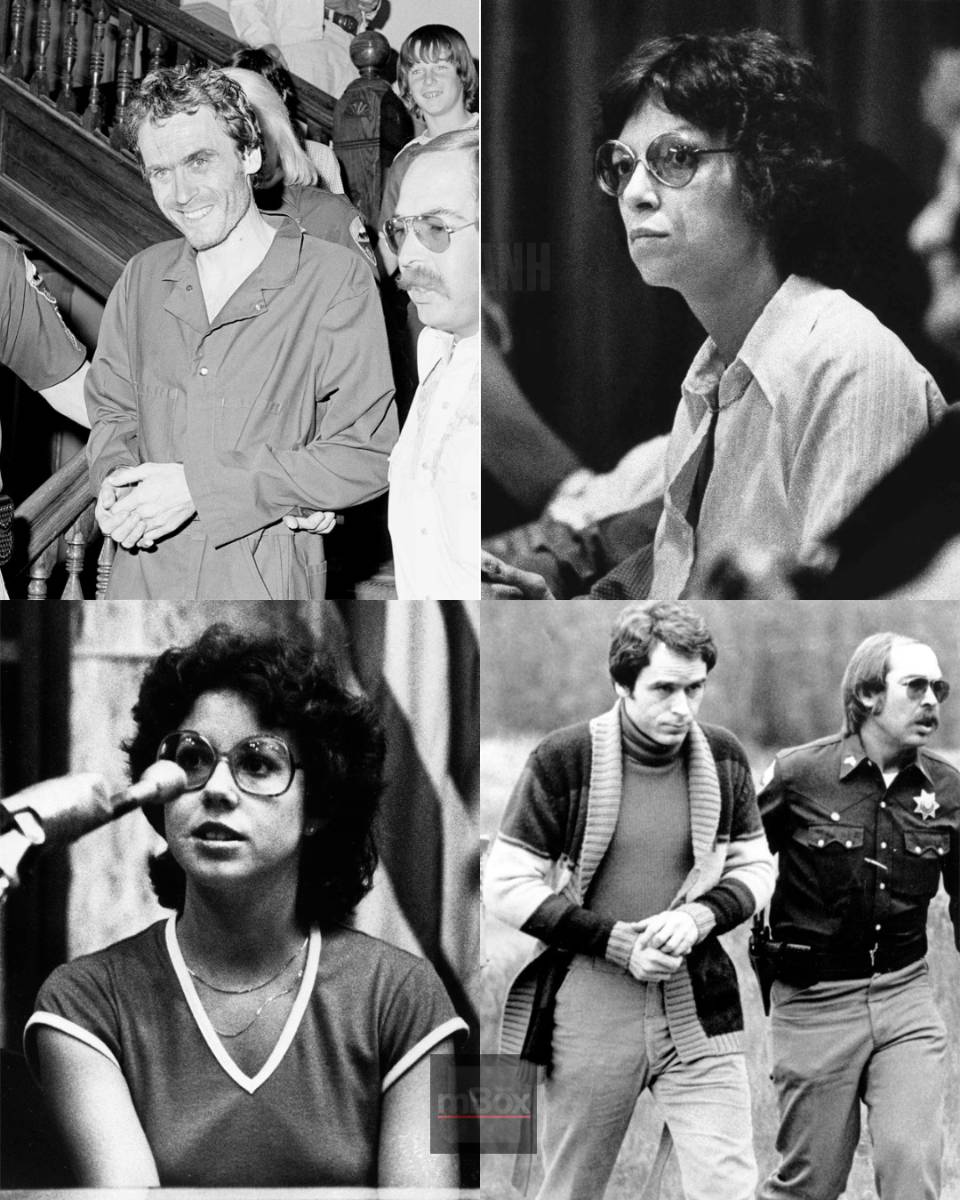 That’s been the forever-buzz on Bundy, the serial killer who was executed 31 years ago and, when his story is being told onscreen, has historically been played by really good-looking men, including Mark Harmon, Cary Elwes, Billy Campbell, James Marsters, Adam Long and, just last year, Zac Efron—all ways of illustrating how he was a guy who had no problem getting women to let their guard down around him due to his socially acceptable outward traits.
“Bundy represents for us our most primal, deepest, darkest fear, which is that you don’t know the person next to you,” Joe Berlinger, director of the Efron film, the aptly titled Extremely Wicked, Shockingly Evil and Vile, and executive producer of Netflix’s Conversations With a Killer: The Ted Bundy Tapes, told E! News last year.
“We want to think that serial killers are easily identifiable, that once you see them you know, ‘OK, that guy must be a serial killer,’” Berlinger continued. But “people really liked him.”
And they liked him until the day he died at 42 years of age in the electric chair at Raiford Prison after confessing to the murders of 30 women.
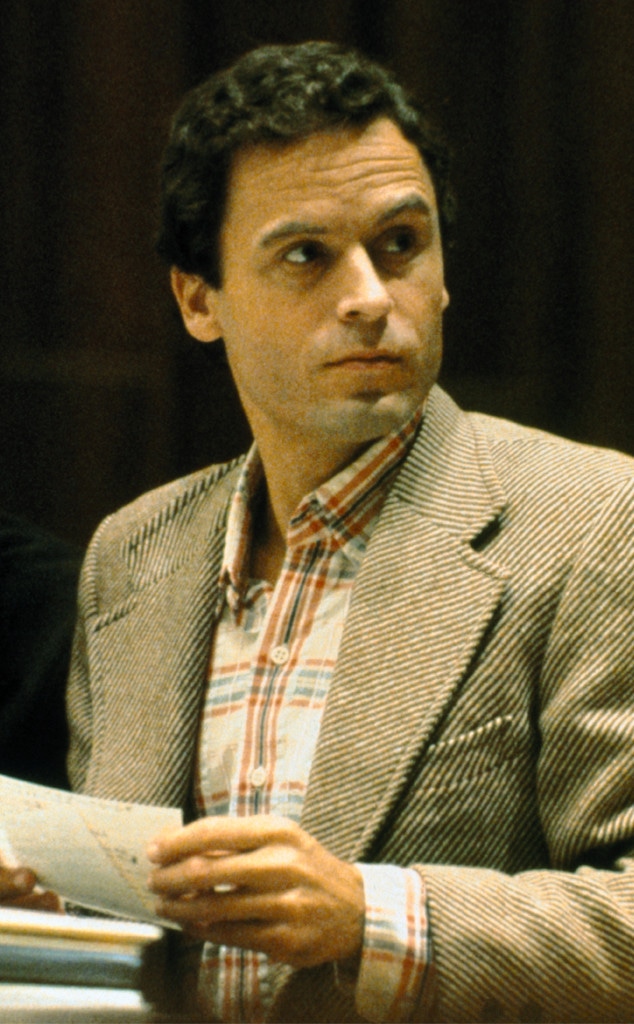 Bettmann/Getty Images
“I shouldn’t be surprised that I still get letters and emails from twenty-year-olds who are fascinated with Ted Bundy,” wrote Ann Rule in a 2009 update to her 1980 best-seller The Stranger Beside Me (which was made into a 2002 TV movie starring Campbell as Bundy). “Thirty years ago, I watched the Florida girls who lined up outside the courtroom in Miami, anxious to get a place on the gallery bench behind his defense table.
“They gasped and sighed with delight when Ted turned to look at them.”
Rule, who died in 2015, befriended Bundy after meeting him at, of all places, a suicide hotline office in Seattle where they were both answering phones on the night shift.
 Lorimar Prods/Kobal/REX/Shutterstock
The true crime renaissance has of course taken on a shade of the glamorous thanks to trending podcasts, probing documentaries and expensive, savvily written limited series that have been dominating award shows. Usually the glamour almost never stops and starts with the killer himself, but Bundy proved the exception to that rule almost from the beginning, with first the very appealing Harmon playing him in the chilling 1986 two-part miniseries The Deliberate Stranger, while the killer was still on death row.
“Bundy’s not a character an actor can hide behind,” the NCIS star told the South Florida Sun-Sentinel in May 1986. “Everything is real. I play him without pretense of guilt or innocence, but the film presents Bundy as if he committed the crimes he was tried for.”
Asked why he wanted the part, Harman, till then best known for the medical 𝒹𝓇𝒶𝓂𝒶 St. Elsewhere, explained, “First, I wanted to work with [director] Marvin Chomsky. Also, I had never acted a heavy before and I liked the idea of playing all the emotional levels that Bundy experienced.”
He wanted to go meet Bundy in prison or at least study 𝓉𝒶𝓅𝑒 of him, Harman said, but Chomsky asked him not to. Harman did spend time, however, with one of Bundy’s would-be victims, a woman from Utah who managed to get out of his car and run away.
More than 30 years later, the role of Bundy would still prove appealing to an actor looking to do something completely different.
“It doesn’t really glorify Ted Bundy,” Efron told Entertainment Tonight in March 2018 about Extremely Wicked. “He wasn’t a person to be glorified. It simply tells a story and sort of how the world was able to be charmed over by this guy who was notoriously evil and the vexing position that so many people were put in, the world was put in. It was fun to go and experiment in that realm of reality.”
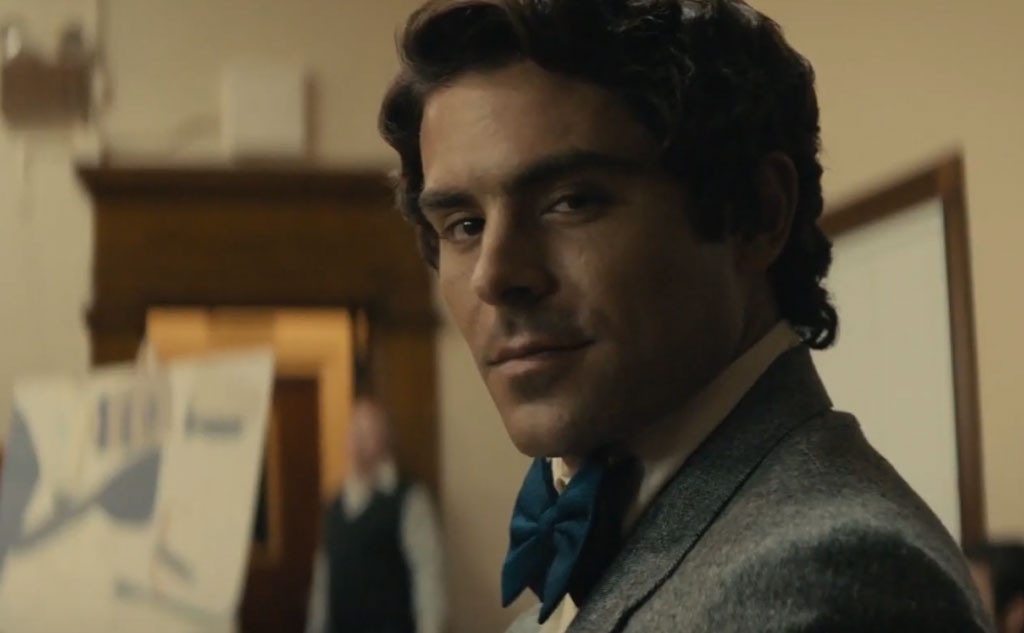
And it is exponentially more chilling when the devil comes calling looking like… well, like Zac Efron, star of High School Musical and countless shirtless photos.
 YouTube
“Ted was never as handsome, brilliant, or charismatic as crime folklore has deemed him,” Rule wrote. “But, as I have said before, infamy became him…I always believed that time would blur the interest in Bundy, particularly after his execution. Instead, he has become almost mythical.”
Bundy wasn’t a mastermind. Countless women refused his ruse, which usually included a request to accompany him to his car for some reason, meaning he left witnesses behind practically everywhere he went and circumstantial evidence abounded in his car and apartment. Yet at the same time, he was both unassuming and handsome enough not to trigger alarm bells for lord knows how many people, some of whom didn’t know how lucky they were to live to tell the tale of the cute fellow who approached them at the park, or beach or bus stop.
He blended in, and even though dozens of people saw his ultimately infamous tan Volkswagen Beetle, that didn’t stop him from driving it across state lines, back and forth. And he was brazen, sometimes driving for hours with dead girls in his car, and returning multiple times to where he dumped their bodies to visit their remains.
“Intellectually, I’ve always known that Bundy is somebody who did not act the way he appeared to many,” Berlinger says. “But by experiencing these tapes, we get an understanding into how somebody like that could be believable to so many, and yet capable of such evil.”
What he was, any way you look at him now, was a monster.
 Netflix
Berlinger explained last year that, aside from it being the 30th anniversary of Bundy’s execution, the impetus for Netflix’s Conversations With a Killer was their acquisition of taped interviews that journalists Stephen G. Michaud and Hugh Aynesworth conducted with the murderer on death row in 1980. (Extremely Wicked was also ultimately bought by Netflix to distribute after it premiered at the 2019 Sundance Film Festival.)
“It’s entering into the mind of a killer,” Berlinger says, “to understand how somebody could be so deceptive, so manipulative, and what makes him tick. I think it’ll be utterly fascinating for people.”
In their 1983 book The Only Living Witness, since updated, Aynesworth and Michaud call Bundy “handsome, arrogant and articulate.” Women of all ages, not just misguided twentysomethings, flocked to get a glimpse of him when he went on trial in Miami for murdering two Florida State sorority sisters and attacking two others, as well as another student in an apartment eight blocks away, in a bloody spree on Jan. 15, 1978. All three survivors testified at trial.
 Acey Harper/The LIFE Images Collection/Getty Images
Bundy went on trial again in Orlando for the Feb. 9, 1978, kidnapping and murder of 12-year-old Kimberly Leach.
He was convicted and sentenced to death for all three murders, though technically the crime he was executed for was killing Leach, a junior high student who disappeared from school on her way to her homeroom class to retrieve her purse. Her remains were found seven weeks later in a hog shed by Suwannee River State Park, in Live Oak, Fla.
Ultimately, however, these three murders were the sloppy climax of Bundy’s epic display of savagery wrought over four years in seven states. Before he was executed he confessed to 30 killings, which doesn’t mean he wasn’t responsible for more, and over the years he played along with the not far-fetched assumption that he may have been responsible for at least 100 murders, not including numerous attacks.
“I don’t think even he knew…how many he killed, or why he killed them,” said the Rev. Fred Lawrence, who administered Bundy’s last rites, according to David Von Drehle’s 1995 book Among the Lowest of the Dead: The Culture of Death Row.